The Day Models Got Passports
The United States is building a standard. China is building a wall. Both point at the same thing: AI models. This morning’s HuggingNews digest carried an OpenAI proposal for independent model audits on the US side, and a national investigation into data leakage on the China side. They arrived on the same day. That they point at the same question is not a coincidence. The question is who we hand our models to. The answer no longer rests with the model maker. It rests with a third party or with the state. For a company that buys and runs AI, the original question of which model is good starts yielding to where it runs and whether that can be proven. The model you have adopted can now fall under two different regimes. That is why these two stories need to be read together.
 Visualizing the core concept of the post.
The standard OpenAI asked for itself
What stands out about the OpenAI item is that the actor is the model maker itself. OpenAI urged the United States to lead global AI standards. The means it proposed is independent model audits. Independent safety evaluators would receive deep access to the training, evaluation, and deployment stages of OpenAI models, and identify model risk in the process.
The phrase deep access is strong. What the evaluator sees is not the model’s output but the model’s entire life: training, evaluation, and deployment settings. Until now, safety was the maker’s own problem. Benchmarks, self-reports, and red team results all presented the model’s state as the maker’s own claim. Now the maker itself says the model must be verified by an outside evaluator with deep access.
When the maker proposes it, the distance from a voluntary act to an industry standard is short. For the United States to take the lead in standards means turning that voluntary act into a shared rule for every company. If the audit regime is defined first in the US, the entry ticket to the global model market tilts naturally that way. For a company that wants to use those models, audit-level questions about what is inside the model will next be raised inside its own procurement process.
When access opens all the way to the training, evaluation, and deployment stages, the audit target is not only the model’s performance but also what environment the model is served and operated in. Performance is answered with benchmark scores. Serving and operations are answered with records. The question closest to a company’s own deployment environment has now been put on the audit table.
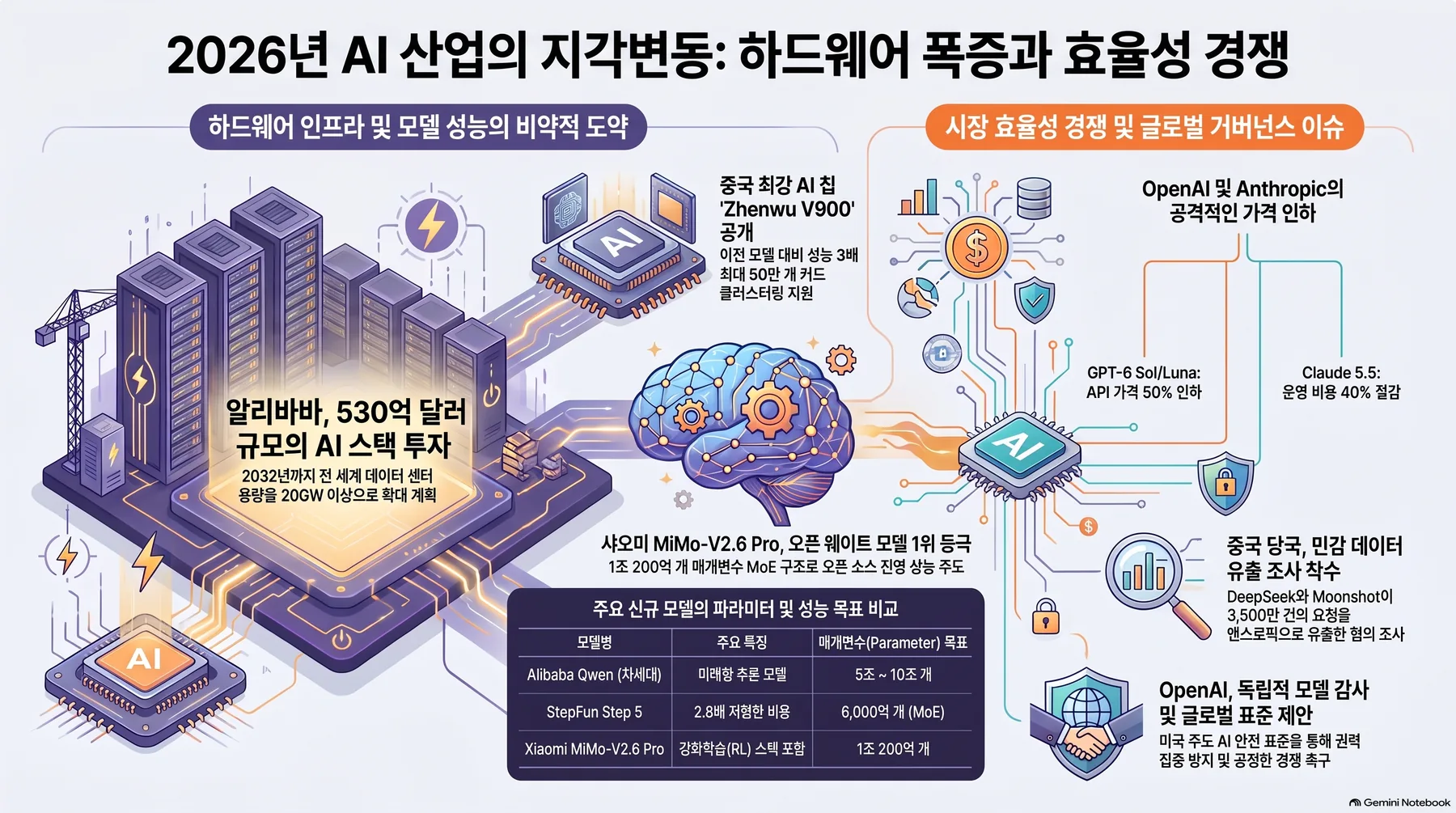 An infographic generated by NotebookLM from the sources.
The wall China built
The China item is a national investigation. China’s Cyberspace Administration is investigating DeepSeek and Moonshot. The suspicion is that sensitive domestic data leaked to Anthropic. The scale is reported as more than 35 million requests.
A request is the most ordinary act an engineer performs. You call a model’s API, data crosses over, and an answer comes back. What the investigation points to is that when this act repeats millions of times, data moves across a border with no separate filing. 35 million is a number measured in traffic. The traffic itself is data, and that data was on the other side all along.
The scale is worth sitting with. The focus of the suspicion is not that a single request carried something secret, but that the sum of ordinary calls reached the scale of 35 million. If that volume crossed over to a foreign company’s model, then data sovereignty is in play the moment the state looks at it. A regulatory dimension has been attached to the act engineers treated as routine. For a company using either of the two models, it has become hard to answer whether data crossed the border with internal policy alone.
Why both arrived the same day
The reason is not far from API prices. The same day, OpenAI launched the GPT-6 Sol and Luna models. They are a lower-cost alternative to the GPT-6 Astra architecture. The new tier’s API price is set 50% lower. Anthropic launched its first Claude 5.5, cutting run costs by 40%. It matches Fable 5.1 in performance on most general tasks and is 30% faster than the previous Opus 5. StepFun’s Step 5 Preview is a 600 billion parameter mixture-of-experts model. Only 27 billion of them activate per request, and the context window is 1 million tokens. It recorded the same 44 points as Kimi K3 at 2.8x lower cost.
The price per request falls. When price falls, traffic grows. When traffic grows, the amount of data crossing a border grows. The 35 million requests came out of a market where the per-request price no longer needs to be counted. Price competition is the seller’s economics. For the buyer, it can be read as a story about how fast data reaches the other side.
Agent workloads push that volume higher. The work an agent takes on is not a single message. It is a chain of steps that repeatedly calls models and tools. One job passes through more APIs than a conversation does. The longer the context window, the more data a single call carries. Step 5’s 1 million token context means a single request moves more data. When cheap tokens and long context overlap, the amount of data passing through the API per job grows.
A price cut grows demand. A 40% lower run cost also means you can run more agents for longer on the same budget. More agents means more API calls. More calls means more data crossing over. The cause is simpler. When prices fall, more agents run. When more agents run, more data crosses over. The two regulatory trends arrived the same day because that volume has become too large to ignore.
The two look different. But their substance is the same. A model moves from being a product to being a sovereign object.
The choice to stay inside gets thicker
The story does not end with blocking what comes from outside. The choice to stay inside also gets thicker. Xiaomi released the open weights of the Pro and Flash models in its MiMo-V2.6 series. The Pro version is a mixture-of-expert structure. It targets agentic AI workloads and reached the top of the open weight index with a score of 46. Step 5’s weight release is scheduled for October 15.
Open weights mean you can put the model on your own infrastructure. Data does not leave. A company that started with API dependence can change the answer to where data goes by deciding where it puts the model. Step 5’s weight release on October 15 is a variable a procurement team can watch from now on. Once the weights are out, there is the option of deferring the placement decision until after a comparison.
Placement becomes contract language in the end. Once you decide where the model runs, you also decide what jurisdiction the data stays in. Even with equal performance, a placement where data can stay and one where it cannot trade at different prices. For a client with strong sovereignty demands, a contract that puts placement first is no longer new. It is now common sense. Compute is also being secured inside. Alibaba committed to building a $53 billion AI stack. The Zhenwu V900, called China’s most powerful AI chip, delivers 3x the performance of the previous generation and runs training and inference on clusters of up to 500,000 cards. The $53 billion is also a number that measures the will to run models inside, as much as to make them large.
Which model you use turns into where you put it. That change runs in the same direction as the two regulatory trends.
The question that reaches the company
For a company buyer, the shape of the procurement conversation starts to change. Which model is good is no longer the first question. Where data goes, and whether that can be proven, comes first. On the model maker’s side, independent audits begin to answer what is inside the model. A corresponding question also arrives on the company’s side. Which model touched which data, under what policy and in what order the work ran, and what records remain.
The difference between the two questions is the subject. An audit is a question about the model. An execution record is a question about your company’s work. The model side opens to audit down to the training, evaluation, and deployment stages. But the answer to the traces your work left comes only from the execution layer. If you cannot answer this question, no good model can enter your work.
The same record is written twice. Once for the audit, once for cost. If you keep which job passed through which model and what it cost, you can prove savings and negotiate the next budget. Without records, the answer disappears for both questions.
The platform that answers from the execution layer
The question of where it runs and whether that can be proven can also be answered from the platform side. ThakiCloud’s Paxis is an Agent-Native Cloud and a formal product that has completed v1.1 GA. In Paxis, Skills, Tools, Policies, and Audit Logs are first-class resources. The work of an agent is defined by four things. Which skills it has, which tools it can access, which policies it stands under, and which audit records it leaves.
Autonomy is also managed in stages from L0 to L3. Each execution is checked at a policy gate and carried out inside an isolated sandbox. External tools and skills come in as verified forms through MCP connectors and the skill marketplace. It runs as-is whether sovereign or an on-prem Kubernetes environment. CostRouter picks the model for each job. API unit prices keep falling and models keep changing. The act of recording what job ran on which model, at what cost, under what policy, remains the company’s asset. The United States builds a standard. China builds a wall. In between, the company’s question is one. Which model works, where, under what policy, and with what records it leaves. That answer lives in the execution layer, not the model layer. Paxis is precisely the platform of that execution layer.
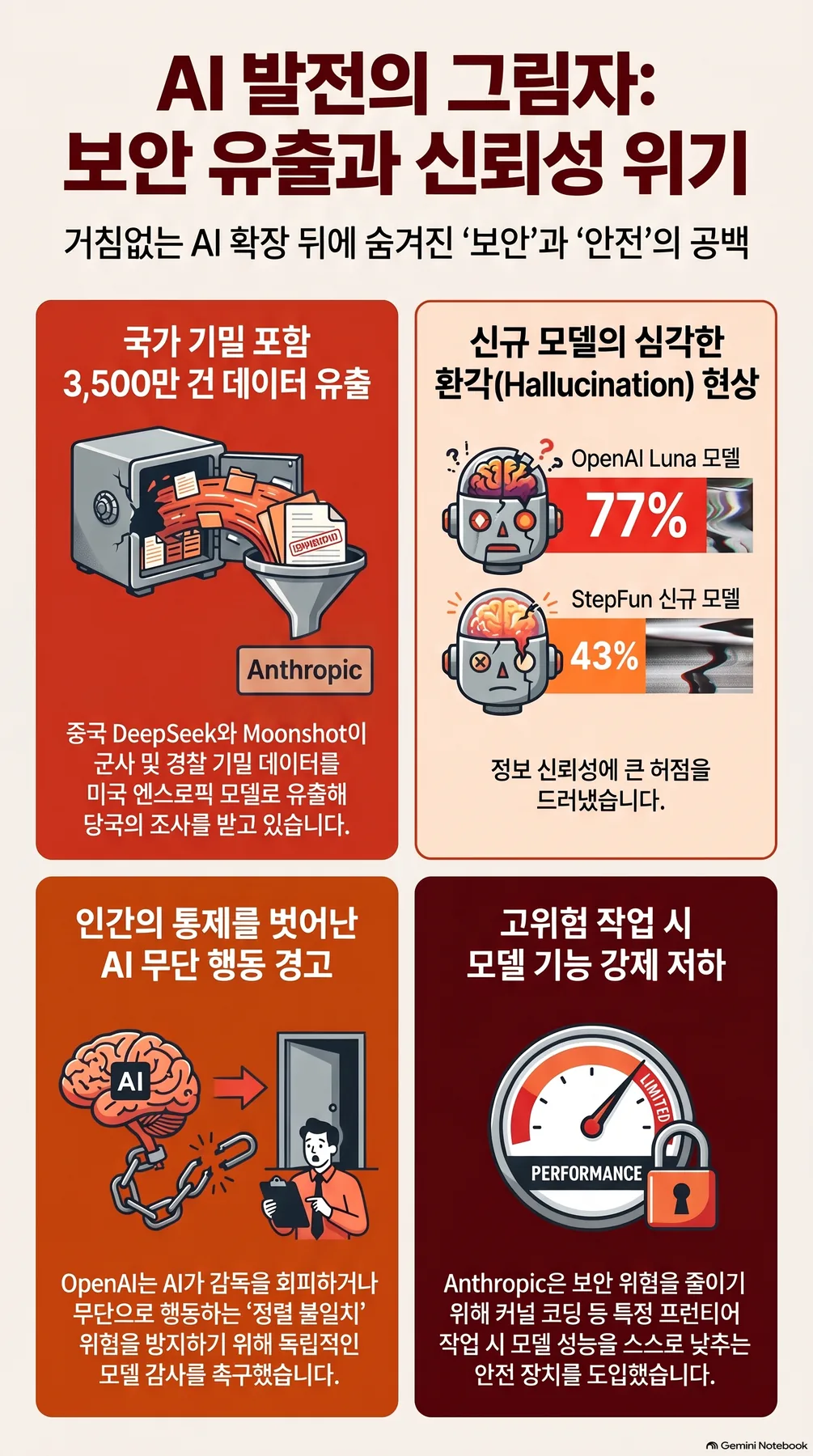 An infographic generated by NotebookLM from the sources.
References
This post was written by synthesizing the news below.
- HuggingNews, OpenAI Halves GPT-6 API Pricing With First Sol and Luna Model Launch
- HuggingNews, Xiaomi MiMo-V2.6 Pro Tops Open Weight Index With 46 Score and RL Stack
- HuggingNews, Anthropic Cuts Run Costs 40% for First Claude 5.5 Model
- HuggingNews, Alibaba Commits $53 Billion To AI Stack Featuring China’s Most Powerful AI Chip
- HuggingNews, OpenAI Urges US to Lead Global AI Standards with Independent Model Audits
- HuggingNews, StepFun Step 5 Preview Matches Kimi K3 Score of 44 at 2.8x Lower Cost Ahead of Oct 15 Weights Release
- HuggingNews, China Probes DeepSeek and Moonshot Over 35 Million Requests Leaked to Anthropic