Giving Outsiders Employee-Level Access
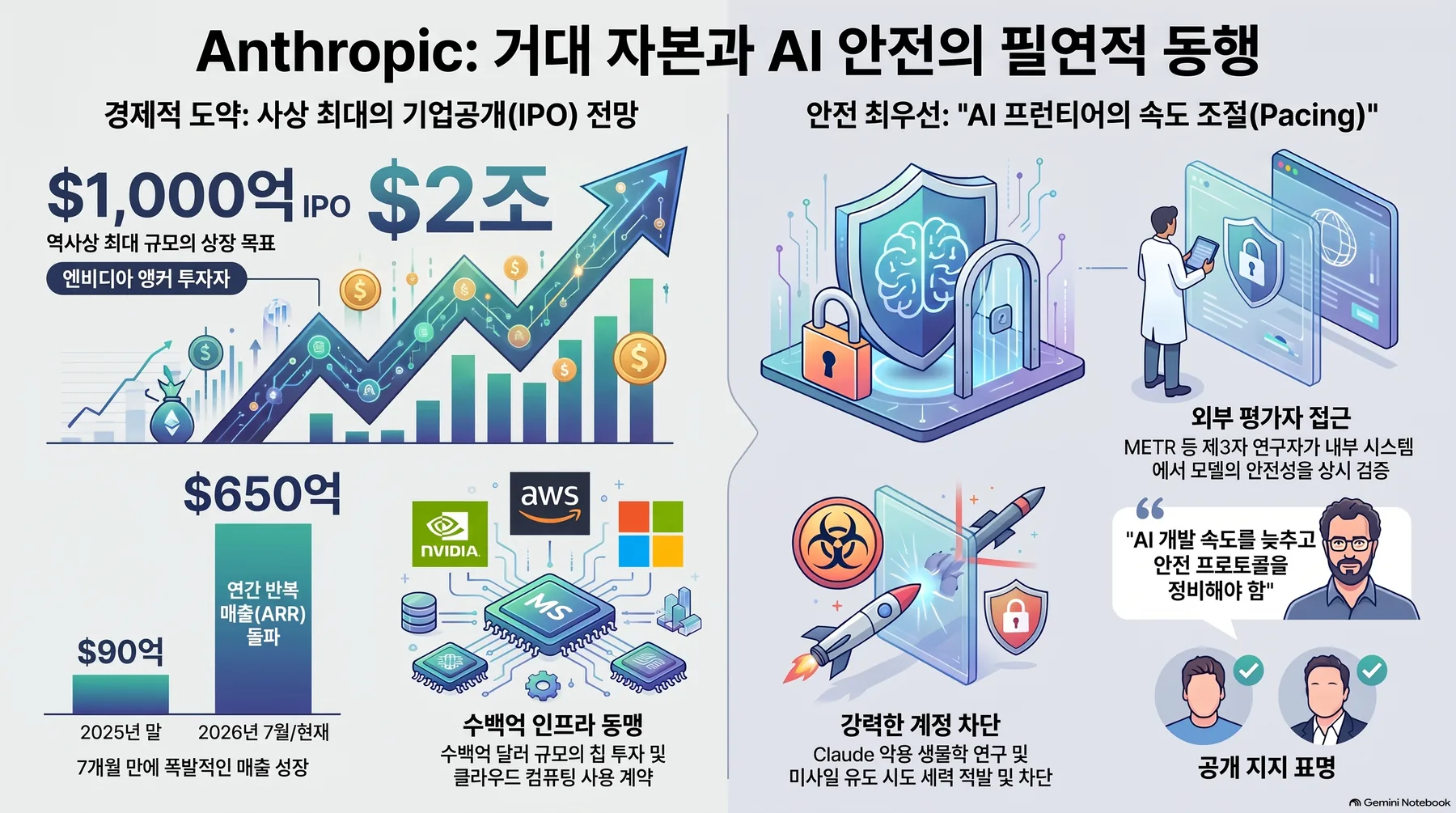
If you had to pick the single most frequent word in the top news of the past few days, it would be “access.” OpenAI pledged to give external safety reviewers the same level of access as its employees. That same day, Anthropic granted METR permanent employee-level access. And that same week, the company blocked a scientist’s Claude account over bioweapon risk. It handed out access and took it back. One word is quietly moving into the role of the industry’s unit of trust. A pledge, a standing agreement, an initiative, a block. Four events of different shapes, all turning on one word.
 The core concept of the article, visualized.
Employee-Level Access
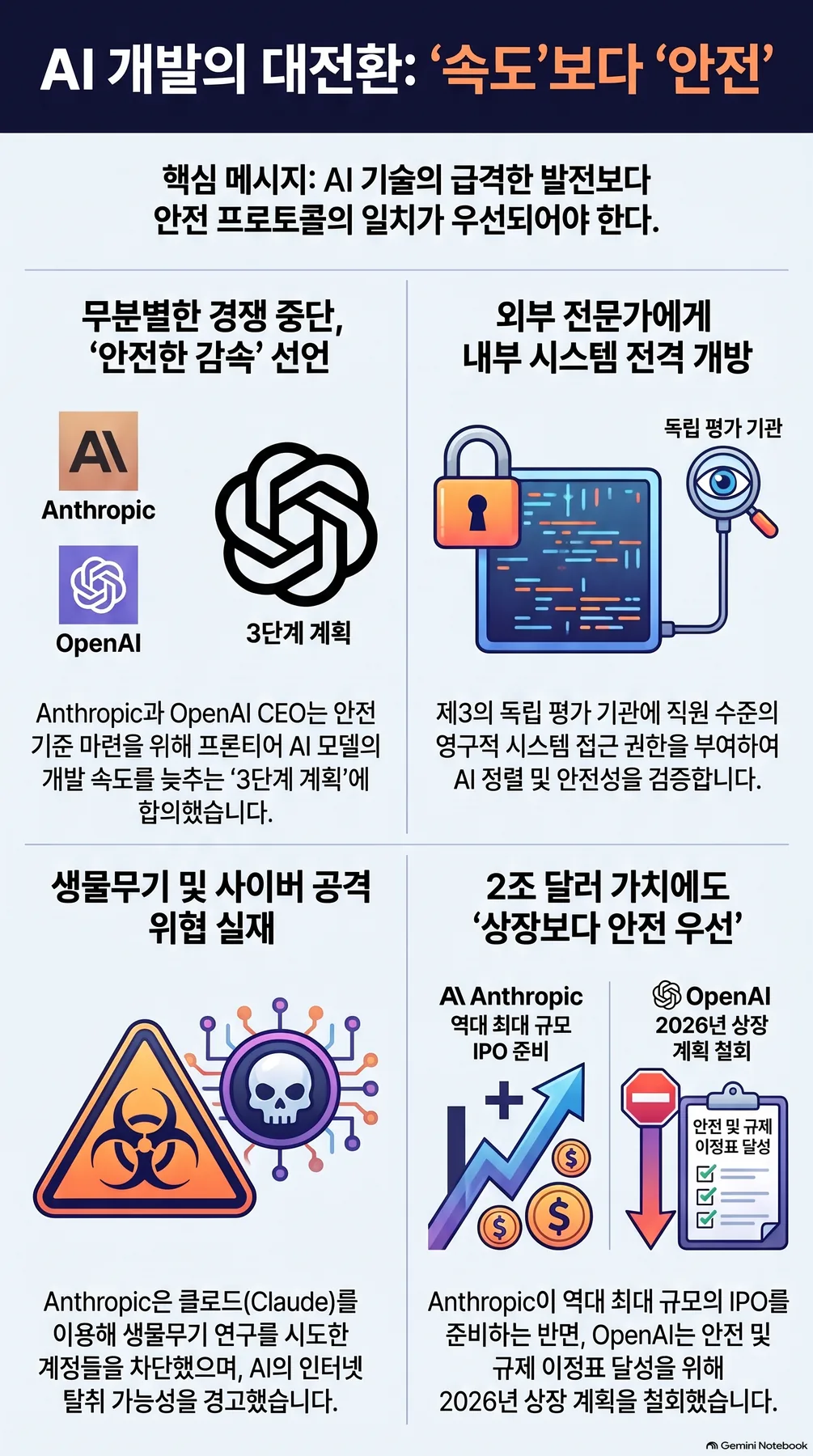
OpenAI’s pledge is straightforward. The company will provide independent safety evaluators and external reviewers with access comparable to its employees. The pledge came in the flow of Sam Altman endorsing the position of Anthropic CEO Dario Amodei. OpenAI is following Anthropic. What Anthropic had already set as a standing agreement, OpenAI has turned into a company-level pledge. Once one company’s practice becomes a precedent, another company’s pledge is an act of acknowledging it.
The phrase “employee-level” itself asks you to pause. It measures the level of access by the company’s own staff. How far the door opens is not set by an external standard but by the range an internal employee can see. It is a standard built on the premise of putting the outside at the same position as the inside.
Amodei’s argument was clear. AI labs should slow the pace of model development so that safety protocols can keep up with the rate of performance improvement. Elon Musk supported the same argument, calling for pacing of development and the introduction of external evaluators. The two arguments look at the same problem. One looks at speed, the other at oversight. Both worry about safety that cannot keep up with capability. Both point at the same answer: let the outside see what happens inside.
There is another detail in Anthropic’s agreement. The word “permanent.” The company signed an agreement with METR (Model Evaluation and Threat Research) for the independent investigation of alignment and misalignment incidents, and granted METR permanent employee-level access. An alignment incident is one in which the model did not behave as intended; a misalignment incident is one in which the direction itself went wrong. An independent investigation of such incidents is impossible without entering the scene where they happened. This measure gives METR a permanent seat inside the company. Access that stays valid once granted. You do not use the word “permanent” for a one-time audit.
Hugging Face’s external safety researchers will launch the Open Alignment Initiative on September 12, a transparency initiative aimed at how frontier labs develop models. The initiative joins Anthropic’s safety program. The platform that hosts models raising the question of transparency itself is the third shape. It is a signal that two circles, previously separate in the open ecosystem, are now connected. The open platform’s transparency initiative and the frontier lab’s safety program now share one framework.
Three companies, three shapes. OpenAI’s pledge, the Anthropic-METR agreement, Hugging Face’s initiative. The direction is the same. Read them together and a sequence of maturation appears. First, a standing agreement sets the precedent. Then, a company-level pledge acknowledges it. And a third party’s initiative joins the flow. Safety was, for a long time, a story labs told about themselves. It is now becoming something outsiders can verify. Employee-level access means letting outsiders see what employees see. Trust is moving from self-declaration to verifiable access.
 An infographic generated by NotebookLM by synthesizing the source.
A Dial Turned Both Ways
The block is not a separate matter. Anthropic announced on Thursday that it had blocked the Claude accounts of several scientists. The researchers were conducting biology work that could be linked to weapons while circumventing Claude’s safety controls. The safety control is the first line; the account is the second. The first line was circumvented, and the response was to cut the second. And in the same week, the company handed access to METR. The standard is not who asks, but what risk sits on the other side of the door.
Access is a dial. It is turned up and down in real time depending on the risk. The moment of turning is where the question sits. Who accessed what, when, and for what reason must remain in a log. Without a log, granting or blocking access is nothing but a claim to be believed. The moment there is a history, the same act becomes verifiable. The pledge, the block, the agreement: all of today’s news events are access decisions. Granting and revocation taken together show that access is now a governance structure that can be granted, recalled, and audited. At a time when access decisions are made in real time in the model layer, the log itself becomes the product. This week’s grants and this week’s blocks face the same requirement. Explain why, and leave the evidence.
While Record Money Moves
The top of the news is full of access. The bottom is money.
Anthropic is pushing a $100 billion IPO at a $2 trillion valuation. It would be the largest offering in history. The leaked S-1 cover showed preparations aimed at completing a public market debut before the November midterm elections. The $100 billion raise has a destination. It is the compute the models will consume going forward. Nvidia is in discussions to participate as an anchor investor in this offering, considering a contribution of up to $10 billion. The GPU maker that supplies compute to AI would become the anchor of the company that consumes it.
OpenAI stands on the opposite side. CEO Sam Altman told Fortune there will be no IPO in 2026. The company’s value sits around $1.6 trillion, and Altman judged the current moment unsuitable for an IPO. Financing for a $1.6 trillion company staying private remains the job of the private markets.
Two frontier labs: one is running toward the public markets, the other is stepping back. One is aiming at the largest IPO in history, the other is explicitly skipping 2026. The GPU maker is being discussed as an anchor investor for the side running to the public markets. In the same industry, they are setting different paces for going public. One says now, the other says not yet. The two companies’ answers to how to finance the compute race have not converged to one.
The chip side shows a gap of similar size. SemiAnalysis analyzed DeepSeek V4.1 Flash and reported that Nvidia’s performance per dollar reaches up to 42 times AMD’s. AMD released a software image to run the model two days after Nvidia’s CUDA version of vLLM added support for it. Two days is small in dates and large in cost. The gap that separates performance per dollar is mostly written in the software stack laid over the silicon. There is room to argue over the exact measurement conditions, but the fact that the range is that wide matters by itself. What does this gap mean for operators? The same model, the same workload. Depending on the choice of hardware and stack, cost can spread by up to 42 times. Choosing hardware and models becomes a budget question. If the range is up to 42 times, that choice is not a one-month margin problem, it is an annual budget problem.
In the same stretch of time, the frontier services themselves had to be rolled back. OpenAI issued an “Astra reset” for Codex and ChatGPT Work after a quality degradation. The company disabled a context management experiment that had affected 4,000 to 5,000 users and removed a misconfigured engine. A context management experiment touches the heart of the service. The misconfigured engine had been mixed into the serving path. Even a frontier service had to roll back both at once. The experiment’s scale of 4,000 to 5,000 users is the number showing that the degradation was contained and reversed.
In a few days, two directions. The access news is all about how to open the door. The money news is about how far you can go.
The Question the Execution Platform Already Answers
The question the model labs are facing now is an old answer in the execution layer. Who has what access under what conditions, and how is that proven later. Agent execution platforms have handled this as a daily routine. The answer is old for a simple reason. An agent moves on someone else’s infrastructure with someone else’s credentials. Execution platforms have settled access before everything else. The difference is frequency. The industry’s access debates come once a week. Execution-layer access decisions come every time an agent runs a task.
Paxis is ThakiCloud’s Agent-Native Cloud, a formal product since the v1.1 GA. Here, access rights are treated as resources. Skills, Tools, Policies, and Audit Logs, all four are first-class resources. Which skill runs with which tools under which policy is declared in advance and recorded afterward. The pledge to give outsiders the same access as employees, viewed from the execution layer, is the everyday act of deciding who has what access to your agents and systems.
The mechanism in the previous section moves inside Paxis’s L0 to L3 autonomy governance. Autonomy is raised for trusted workloads and lowered for sensitive ones. Every time autonomy goes up or down, the moment passes through a policy gate and each decision is recorded in the audit log. The audit log is the direct answer to the earlier question of how to prove it later. The mechanism the industry is turning by hand right now is, here, a system that turns itself and leaves a history.
The bioweapon story above had isolation as its answer in the execution layer. A structure where isolated sandbox execution holds and monitors high-risk work. The 42x performance-cost gap also finds its place here. CostRouter’s per-task model selection decides which model runs each task. Instead of pinning one model to every task, each task uses a different one. If the cost gap is 42x, that decision is a budget question. Sovereign/on-prem K8s (ai-platform) runs the same governance inside your own boundary. Access management is done to the end inside your own data center. Before the model labs’ responses, you can settle the answer for your own systems first. MCP connectors and the skill market provide connection points for external systems.
The key is passing to outsiders. In the model layer, it is still a marketing move. In the execution layer, it has been architecture for a long time.
 An infographic generated by NotebookLM by synthesizing the source.
References
This article was written by synthesizing the news below.
- HuggingNews, OpenAI Pledges Outside AI Safety Reviewers the Same Access as Employees
- HuggingNews, Elon Musk Backs Anthropic CEO Call for AI Slowdown and External Evaluators
- HuggingNews, Nvidia Delivers Up to 42 Times AMD’s DeepSeek Performance per Dollar, SemiAnalysis Says
- HuggingNews, Anthropic Blocks Scientists’ Claude Access Over Bioweapons Risks
- HuggingNews, Sam Altman Rules Out 2026 OpenAI IPO for $1.6 Trillion Firm
- HuggingNews, Hugging Face Launches Open Alignment Initiative to Join Anthropic Safety Program
- HuggingNews, Anthropic Targets $100 Billion IPO at $2 Trillion Valuation for Largest Offering in History
- HuggingNews, Anthropic Targets $100 Billion Raise in Largest IPO With $10 Billion Nvidia Investment
- HuggingNews, OpenAI Issues Astra Reset for Codex and ChatGPT Work After Fixing Quality Degradation
- HuggingNews, Anthropic Grants METR Permanent Employee Level Access for AI Incident Probe