The Same Day: $1.4 Trillion and 100 People
On November 19, two numbers meshed on the same street in San Francisco. That day, the question of how far to push AI received answers at once from both market prices and a street protest.
The subject of the answers is Anthropic. On its first day of Nasdaq trading at a $1.4 trillion ($1.4T) valuation, roughly 100 people stood outside its headquarters building demanding an RSI ban. The rest of that day’s answers sit between those two numbers. Capital flowed one way and equity moved out of a name, all on the same day.
Today we follow those answers one by one. Each answer comes from a different subject. The market answered with a price, the street with a line, an investor with the location of equity, and the remaining layers of the industry with the conditions of resources. On a day when four subjects answered the same question in four ways, the meaning of the day did not sit inside any single answer alone.
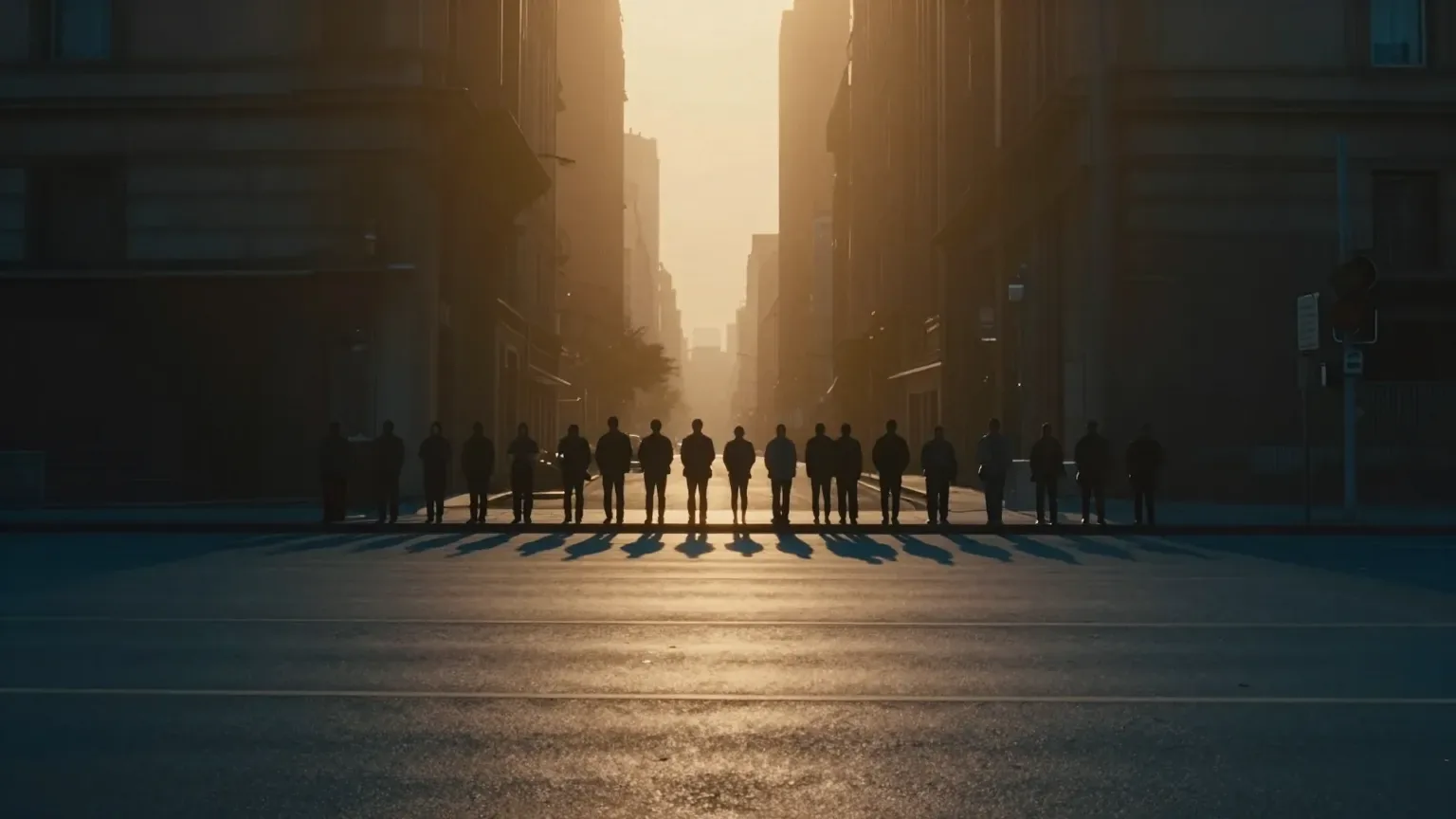 The article’s core concept, visualized.
flowchart TD
    Q["Nov 19, the same question<br/>How far to push AI"]
    Q --> A1["The market<br/>trading opens at a $1.4T valuation"]
    Q --> A2["The street<br/>~100 people demand an RSI ban"]
    Q --> A3["An investor<br/>multibillion stake moves to a nonprofit"]
    Q --> A4["Other industry layers<br/>chip rental curbs, access tiers, OS agents"]
    A1 --> G["The day governance is traded<br/>alongside the stock price"]
    A2 --> G
    A3 --> G
    A4 --> G
The map of that day’s four answers. The market answered with a price, the street with a line, an investor with the location of equity, and the remaining layers with the conditions of resources; the point where those answers converge is the question of the day.
$1.4 Trillion: The Answer Capital Gave
Anthropic began public market trading at a $1.4 trillion valuation on November 19. The listing went ahead despite warnings from Democratic lawmakers. The warning and the trading happened on the same day, which shows that safety concerns did not bend the market’s decisiveness. The number $1.4 trillion is not the size of one company but the market’s appraisal. It also means that the value of the work models produce is now printed on the price list the public market sets.
On the day trading opened, the valuation of a nearby company moved in the same capital market. The news that day carried the fact that SpaceX’s valuation rose by roughly $23 billion. The adjacency the reporting draws ends there. Still, the fact that one company’s trading start moved the price board of another company far from the model shows that capital sees the entire AI ecosystem as a single target.
The CEO’s answer was more direct. CEO Dario Amodei pledged at the time of the Nasdaq debut that the company would not bend to business or political pressure. The two words, business and political pressure, precisely mark the scope of questions the company will face the moment it becomes a public company. Shareholders’ questions about quarterly results are business pressure, and Congress’s questions about regulatory legislation are political pressure.
The words “we will not bend” came on the day the $1.4 trillion in capital began receiving questions. That means governance is now traded alongside the stock price. The pledge itself is not a control mechanism. But it was decided on that same day whether the market would reflect those words in the price, or whether the street would test them through protest.
The event of listing also changes the questions inside the company. Until then, safety was the research team’s priority and cost was an efficiency question. The moment it moved to the public market, both become items that must be explained to shareholders.
Where 100 People Drew the Line
On the day of the listing, roughly 100 people gathered outside the San Francisco headquarters. The rally’s slogan was opposition to “AI competition” and its demand was an RSI ban. Among the protesters was Jacob Coxon, a former researcher.
RSI stands for recursive self-improvement. It is the signature word of the safety discourse about where a model’s ability to improve itself should stop. Demanding an RSI ban is a different point from asking to slow the pace of competition. It is a request to place a line at the point where improvement stacks up recursively rather than happening as a one-time event.
While $1.4 trillion was trading in the market, 100 people outside the building asked for that line to be drawn. To the same question of how far to push AI, the side that answered in numbers and the side that answered on the street came from the same address on the same day. The location of the protest also stands out. It was not a paper, not a regulatory petition, but the entrance of the headquarters where the listing was taking place. It was the day safety discourse began to be heard at the closest possible distance from the public market.
Equity That Moved Out of a Name
The third answer came from equity. Dustin Moskovitz is an early investor in both frontier labs, Anthropic and OpenAI. He transferred a multi-billion-dollar stake in Anthropic to a nonprofit.
The reporting carries the fact of the stake transfer itself. But read in the context of that day, the scene is clear. An early investor who put money into both companies moved a stake in one of them out of his own name. When equity moves into the name of a nonprofit, that capital is no longer directly tied to one investor’s interest. It is a case that answers the question of what name capital should stay with, in the form of equity.
The scene points to another question. Under what structure should an AI company’s equity stay so that the company’s safety position holds most firmly. The subject that has publicly given the answer is not yet in the news. But the fact that the question appeared in reporting in the form of a stake transfer shows that this topic is now also a question of capital allocation.
Other Layers of the Industry That Moved the Same Day
Read the listing day’s feed from the top and you can see that other layers of the industry moved on the same day.
Alibaba’s Hong Kong stock was expected to fall for a tenth straight trading day ahead of its Thursday earnings release. The price had fallen more than 50% from last year’s AI rally peak. In the background sits the phase in which the United States is regulating overseas AI chip rentals. It was the day that while one company’s price was being set at $1.4 trillion, regulation was being laid on top of renting the compute that runs that model. For a company where AI expectations had concentrated into the price, a shift in the conditions of chip supply becomes a shift in the conditions of earnings.
The division of access also proceeded on the same day. Google began granting access to a world model called Genie 4 to Google AI Pro waitlist users first. Notices are being sent to subscribers at that tier. It means the door of this new class, world models, is opening step by step by subscription tier. The waitlist device is also a way of attaching the premise that demand for a new model exceeds supply to the price structure.
On the open-weight side there was movement aimed at tuning for agents. Hugging Face released a third harness adapter for Alibaba’s Qwen3.8-27B model, optimized for NousResearch’s Hermes agent. It is described as a LoRA-style adapter that improves the model’s pass@1 score. The phrase “third” stands out. It means the same style of adapter has appeared twice before, a signal that agent-tuned open-model combinations are a recurring flow.
Movement in the OS majors and the image arena was carried along too. Apple’s new job postings revealed signs of developing an autonomous AI assistant that performs multi-step tasks on behalf of the user and even controls apps. The competitive positioning the headline presents is OpenAI and Anthropic. If a device’s operating system moves toward executing agents directly, the scope of the environment where agents run widens again. In DesignArena’s Image Arena rankings, Microsoft rose to second place among image AI labs worldwide, behind OpenAI.
Tied into a single line, it was the day that every layer gave a different answer to the question of who can use a model, where, at what price, and under what conditions.
The movement of these layers is not causally tied to Anthropic’s listing. But the single fact that they appeared on the same day shows that the AI industry is structured to move multiple layers at once. The moment a price is set in one layer, the premises of that price are adjusted in another.
The Question a Company Must Answer
That day’s answers converge in one direction. Where the governance of the model now sits. That is the question of the day.
Look one layer deeper and this question leads to the enterprise. In the age of buying and using a model, the provider’s governance was a footnote. The provider’s safety position, release pace, and pricing policy were the provider’s problem, and the customer received only the result. In the age of running agents continuously, that distinction blurs. The moment the provider’s governance wobbles, the agent’s execution wobbles.
Specifically, this risk has three branches. The provider’s safety position can turn into a public question, its release and access policy can turn into a price structure, and the supply conditions of execution resources can turn into regulation. The three news items of that day show each of these three branches one line at a time.
The safety discourse, release schedule, and pricing policy of a frontier lab that has become a public company enter the reach of the quarterly report. The CEO’s “we will not bend” is a statement of position, and the street’s RSI demand is a question trying to verify that position. If both are structured to be traded with the stock price every day, the execution conditions of the company that uses the model in between can wobble along with them. The day the safety story wobbles, the day regulation is laid on top of compute supply, the day model access divides by subscription tier. A company will not want a structure in which all of these days transfer onto its own agents’ execution conditions.
For a company running agents, this point is more concrete. If execution is bound to one vendor’s quarterly schedule, the moment the vendor’s stock price wobbles, the agent’s execution conditions wobble too. Yet model supply changes every day, and there is no reason the workflow must wobble along with it. The model is a part you swap out, and the execution environment is the place that receives that part. In an industry where the market price of parts changes every day, if the place that receives the machine is bound to one supplier’s name, the options shrink.
This is where ThakiCloud’s Paxis sits. Paxis is a formal product of the Agent-Native Cloud and is currently running in v1.1 GA.
In an environment where model supply diversifies and rankings change daily, the CostRouter, which picks a model per task, responds. If you let different models be chosen and used according to the nature of the task, you can stop one vendor’s event from becoming the event of the entire workflow. The question demanded on the street, “draw the line,” is answered on the agent execution side. Skills, Tools, Policies, and Audit Logs are managed as first-class resources, and autonomy is governed in stages from L0 to L3. Policy gates check the agent’s movements and every execution is recorded in an audit log. In a phase where regulation is laid on top of chip rental supply, the question of who owns the execution place follows. You can run execution inside an isolated sandbox and bring execution into the company’s building with a sovereign or on-prem Kubernetes (ai-platform) configuration. In an ecosystem where open-weights, agent-specific adapters, and OS majors’ agents all grow together, the MCP connector and the skill market become the links.
The day $1.4 trillion and 100 people stood remains the day AI’s governance became a question of the market. Between the two numbers, the question a company must answer is one. Inside whose building will the agent’s execution place sit. That question demands an answer first at the company’s execution place, even before the next quarterly report comes out.
References
This post was written by synthesizing the news below.
- HuggingNews, Alibaba Heads for 10th Loss, Down Over 50% From Peak as US Curbs Overseas AI Chip Rentals
- HuggingNews, Anthropic CEO Vows Not to Bend to Pressure at Nasdaq Debut
- HuggingNews, Anthropic IPOs at $1.4 Trillion Valuation
- HuggingNews, Dustin Moskovitz Shifts Multibillion-Dollar Anthropic Stake to Nonprofit
- HuggingNews, Apple Develops Autonomous AI Agent for Device Control to Rival OpenAI and Anthropic
- HuggingNews, SpaceX Adds $23B in Value as Anthropic Starts Trading
- HuggingNews, Former Researcher and 100 Protesters Demand RSI Ban at Anthropic SF HQ on IPO Day
- HuggingNews, Google Begins Granting Genie 4 Access to AI Pro Waitlist Users
- HuggingNews, Microsoft Becomes No. 2 Image Lab Behind OpenAI on Image Arena
- HuggingNews, Hugging Face Releases Third Qwen3.8-27B Harness Adapter for Hermes Agent