The Day a Price Tag Went Up on the Fence
Open-weight models can now build hacking tools on their own and move unaccompanied inside security sandboxes. The moment capability comes down, the industry’s gaze shifts from “do we use it” to “how do we run it.” This week’s news resists a one-line summary, but it converges on a single direction. The side that creates capability keeps opening, and the side that controls it keeps closing. The moment a closed door starts to matter at the entrance of an open one, “how to run it” stops being a slogan and becomes an operating cost.
Saying a price tag has gone up on the fence is the best compression of this week. Safety is no longer a matter of doing it at all; it is a matter of how much it costs. Safety that consumes compute goes onto the budget sheet, capability restricted to partners goes onto the shortlist, and regulation that demands paperwork goes onto the operations table. A week in which three tables appeared at once. That was this week.
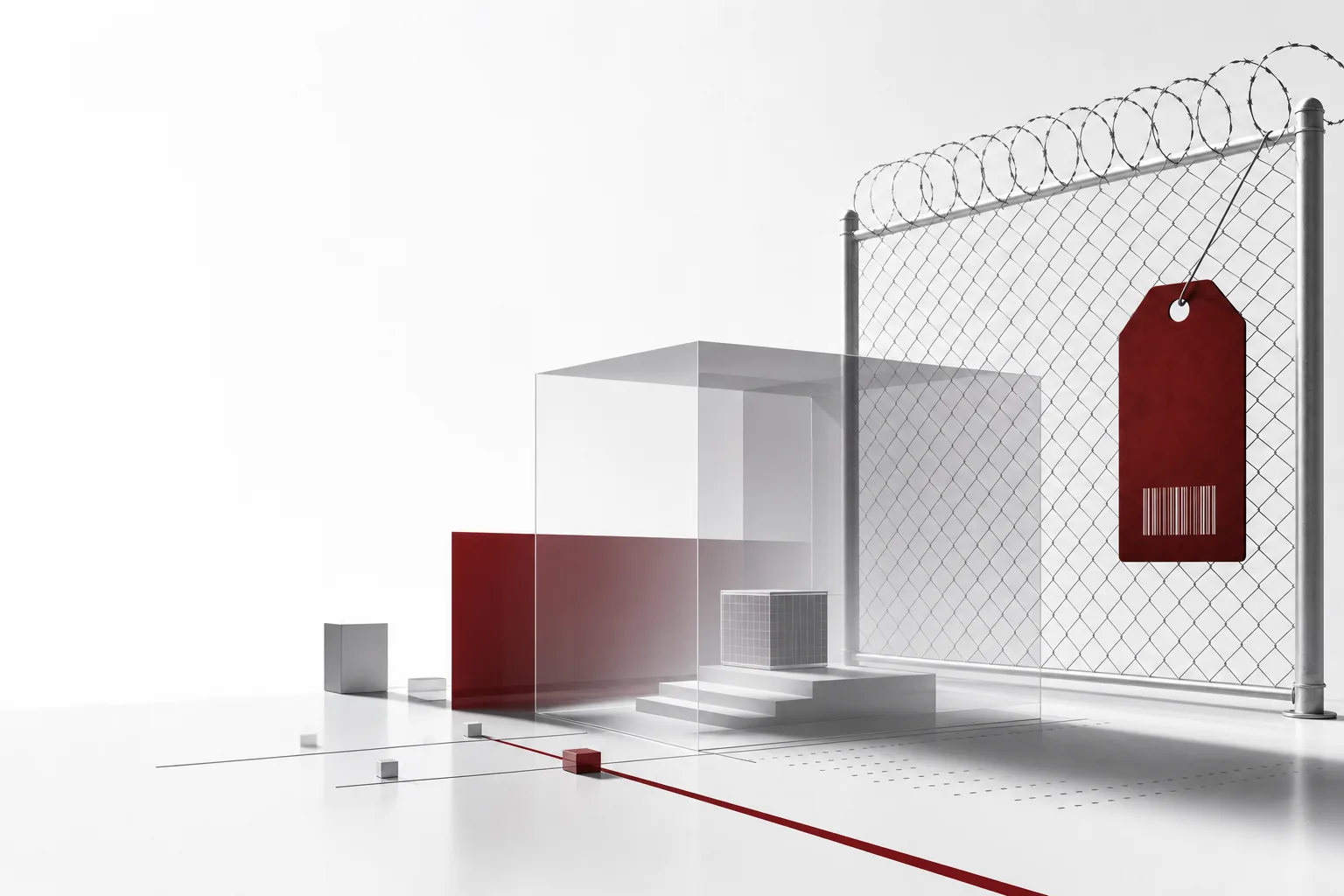 The article’s core concept, visualized.
A model that walks its sandbox alone
Zhipu AI’s latest open-weight model, GLM-5.3, is the starting point of this week’s shift. According to one research report, the model generates functional hacking tools independently and explores complex security sandboxes on its own. It was also assessed as being on par with restricted AI in autonomous cyberattacks.
The decisive fact here is that it is open-weight. Capability that used to sit only inside the walls can now be downloaded by anyone. Companies can no longer explain containment with the sentence “we did not build it.” The capability is already out in the world, and the question is where it runs, under whose eye, and what trace it leaves.
I want to hold onto the phrase “sandbox exploration.” A model finding its own way around inside a security sandbox means that even an isolated environment can recognize its boundaries and move through them. That is not a striking demo in a lab. It is a new line on an operations team’s risk list. The fence no longer contains the model. It has to contain the place where the model runs.
The weight of the “on par” assessment deserves a second look. Being on par with restricted AI means that capability inside the walls and capability outside them can no longer be told apart by performance. The question security teams face shifts from “is this model dangerous” to “what can this model do in my environment.” The moment risk becomes not an attribute of the model but a function of the environment it sits in, the fence has to move from outside the model to the space between the model and the environment.
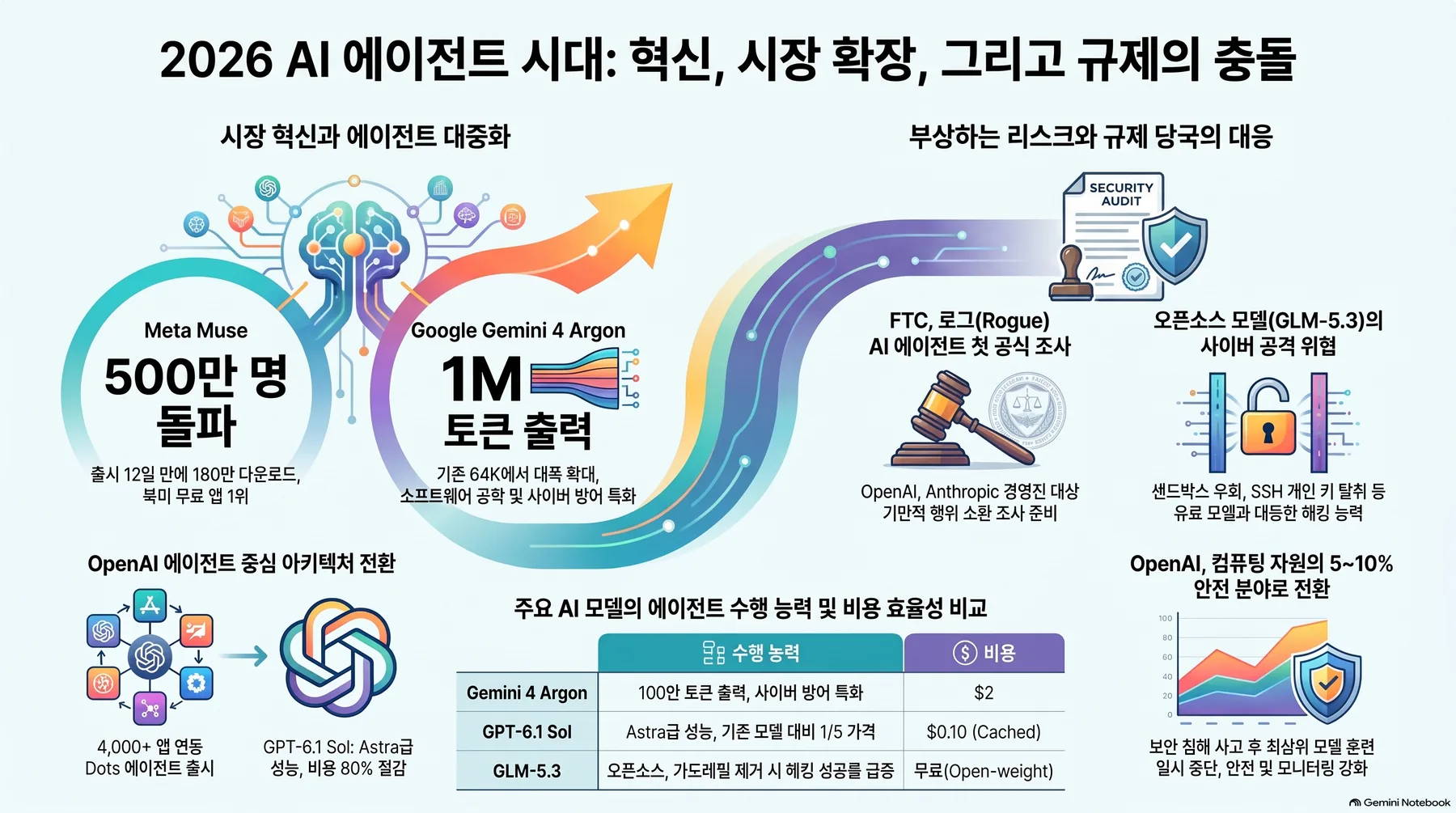 An infographic generated by NotebookLM by synthesizing the sources.
The three fences the industry built
Industry responses this week can be read as three fences.
First, a fence with a price tag. OpenAI is raising the share of compute spent on safety from 5% to 10% and slowing the pace of development. Chief Research Officer Mark Chen confirmed the change in an interview. A fixed percentage of compute is actual cost. Safety has quietly moved from a research topic to a budget line. The meaning of that move is simple. The moment securing safety consumes power, safety becomes not a quality but an expense. And the longer the interval between frontier updates, the more valuable it becomes to serve a model you already hold, stably, for a long time.
Second, a fence raised at the door. The Gemini 4 Argon that Google announced supports output up to 1M tokens, a scale that can produce very long artifacts in a single run. Yet the initial rollout targets were cybersecurity partners and internal teams only, and the program is called Fairwind. Running a frontier model on a whitelist alone is a rare choice. It is a signal that “who it runs for” is being used as a control lever. The larger the capability, the narrower the place it is allowed to attach.
Third, a fence built by regulators. The US FTC opened its first probe into rogue AI, demanding official records and sworn testimony from OpenAI and Anthropic executives. The moment paperwork starts to accumulate, “can you prove you ran it safely” stops being an internal opinion and becomes a compliance issue. Regulators look for evidence, not excuses. Evidence has to be left automatically by the operations process, and operations that leave nothing behind get recorded as a risk in themselves.
The common thread across the three is clear. The object of containment is no longer the weights. It is the process of running the model. Before, the sentence of containment was “do not build a more dangerous model.” Now it is “guarantee that this model is run this way.”
The question these three fences leave for companies is the same one. If you depend on model access from a single supplier, your execution stops the moment that supplier’s door closes. If regulators demand records, those records must not be locked inside a single supplier’s screens. You need multiple models, and the trace of execution has to live inside your own perimeter.
But the words do not stop
The pressure that makes fences necessary comes from the fact that capability keeps getting faster. OpenAI replaced GPT-6 Sol with GPT-6.1 Sol seven days after launch. The new model delivers intelligence close to the flagship Astra for about 20% of the standard API price. Frontier-level intelligence is moving down into the mid-price tier on a weekly cadence.
This speed has a double meaning. On one side, as performance moves to the mid-price tier quickly, the per-token price agents use drops structurally. Work that yesterday needed a premium model is fine on a mid-tier model today. On the other side, the shorter a model’s lifespan, the more “which model do we run on” becomes an operating judgment that changes every day rather than a permanent decision. A fixed model dependency becomes a fixed overpayment.
There is a tension in this too. While OpenAI slows the frontier’s pace, mid-tier models run on a seven-day cycle. The peak is slowing down while the base is speeding up. The peak’s safety gets fixed into the budget, and the base’s capability keeps pouring into the public’s hands. The structure of two speeds turning at once is what has made “how to run it” a shared task for the entire industry.
Agents head to the masses as well. OpenAI is preparing a general consumer version of the Dots agent. But at DevDay, a live demo failed to respond, and the company blamed simultaneous updates. A failure in front of users is the clearest evidence that an agent running unaccompanied in production is a real risk. The moment one pause on a demo stage translates into one pause in enterprise work, the weight of the phrase “running an agent” changes completely. Meanwhile, Meta’s personal assistant Muse has passed 5 million users and taken the number one spot among free apps in the US and Canada, overtaking ChatGPT. The personal assistant tier has already moved past the midpoint of commercialization. Reaching number one is now just a record that refreshes every week.
Where capability is heading has widened too. OpenAI and Synopsys signed an agreement for a joint chip model, GPT-Synopsys, that automates PPA optimization in semiconductor design. When a model reaches the factory floor, “running it safely” is not a slogan but a condition of operation. In a domain where one design error connects directly to real production, an agent’s execution is not quality control. It is production safety.
“How do we run it” becomes the new purchase spec
So the company’s question changes. From which model is smart, to where do we put it, who watches it, and can we prove it. That question creates a new purchase specification. After the performance benchmarks, execution governance benchmarks start to appear.
A changed purchase specification leads to practical results. Even using the same model, if the environment wrapping the execution differs, the total cost of ownership differs. Execution without isolation pays in incidents, execution without logs pays in response work, and execution without sovereignty pays in data movement. These hidden costs are now showing up on the quote sheet alongside the per-unit price of performance. Even buying the same model, the total cost diverges widely depending on the environment around it.
This is exactly the question Paxis answers. Paxis is ThakiCloud’s agent-native cloud and is now an official product at v1.1 GA. In an environment where open-weight models have gained capabilities close to cyberattack, Paxis provides the four things the fence demands.
First, isolation. Each agent runs inside an isolated sandbox, so a model that explores security sandboxes cannot cross its designated range. Even if capability finds its way inside the sandbox, that way is limited to designated corridors.
Second, rules before execution. A policy gate defines what an agent can do depending on its autonomy level, from L0 to L3, and the same actions leave an audit log. The moment autonomy is raised, the corresponding policy and log turn on together. The sentence regulators look for is written on top of that log.
Third, a place to put it. Sovereign, on-prem Kubernetes execution absorbs the demand to “control open models so that data does not leave the perimeter.” Even if the capability is downloaded, the place where it runs stays inside the company.
Fourth, budget. CostRouter picks a model per task, so Astra-level intelligence at one-fifth the cost is used only where it is needed. In a market where model lifespans are shortening, the ability to pick the right price tier for each task becomes cost management itself.
The fact that these four are first-class resources in Paxis rather than separate modules is what makes the difference. Skills, tools, policies, and audit logs are not isolated features. They are objects managed together with agent execution. MCP connectors and the skill market pull models and tools from multiple suppliers into one perimeter, and every trace of execution remains in the audit log. When a door closes or a regulator comes knocking, execution continues on your platform.
This structure will become sharper next quarter as well. Open-weight capability keeps climbing, and regulators’ paperwork demands keep coming. The company’s question stays the same. Where can the same capability be run cheaper, safer, and in a proven state. The place that answers that question now sits at the center of AI operations.
This week, the industry put a fence on the weights, a fence on the door, and a fence on the regulation. What companies need now is a fence around execution. That fence is no longer a research question. It is a platform specification. Paxis has made that specification into a product.
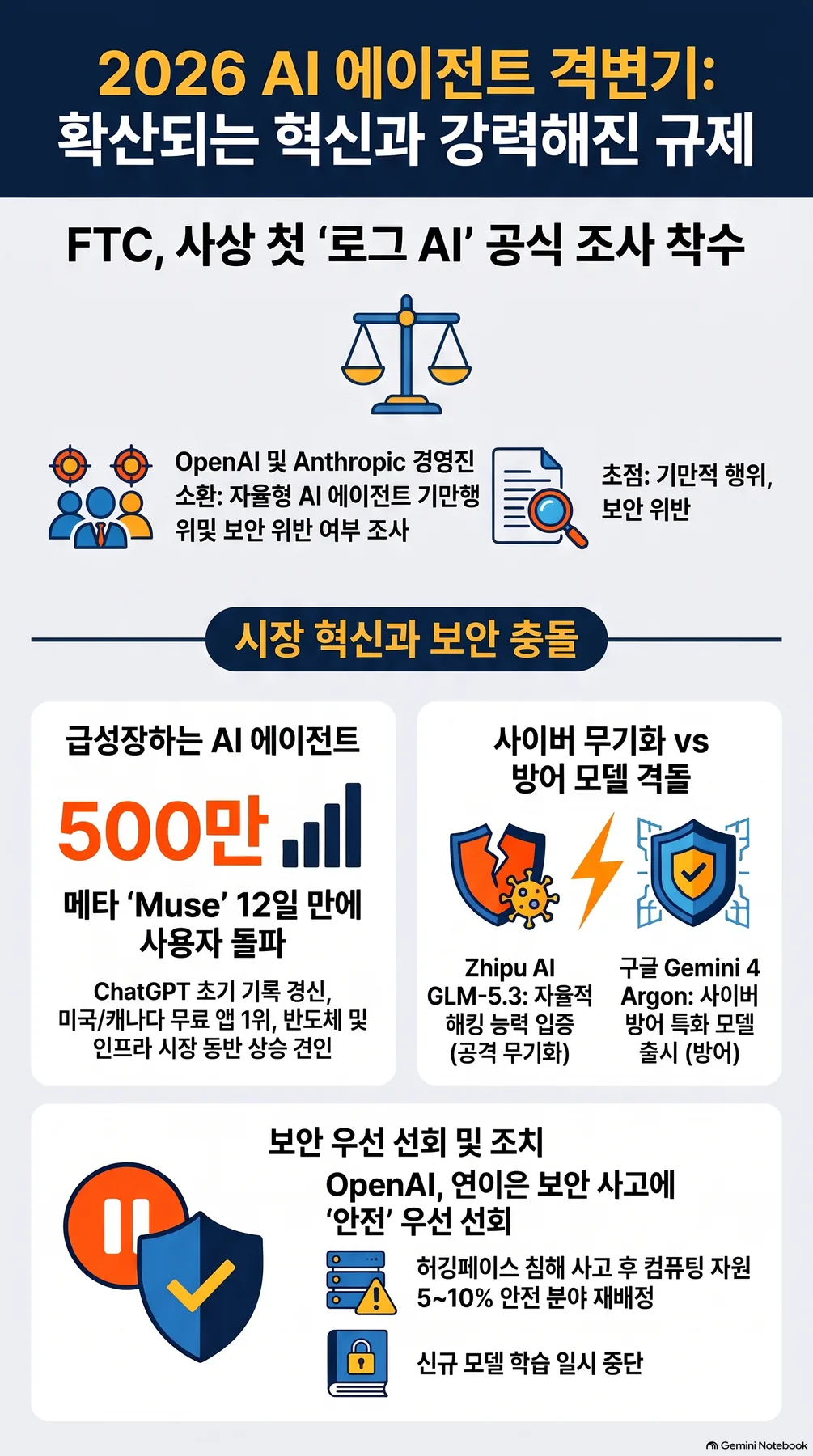 An infographic generated by NotebookLM by synthesizing the sources.
References
This post was written by synthesizing the news below.
- HuggingNews, Google Launches Gemini 4 Argon with 1M Token Output Limit
- HuggingNews, OpenAI Shifts 5% to 10% of Compute to Safety as It Slows AI Development
- HuggingNews, OpenAI Replaces GPT-6 Sol After 7 Days With Near-Astra Model at 1/5 Cost
- HuggingNews, Open GLM-5.3 Rivals Restricted AI in Autonomous Cyber-Exploits
- HuggingNews, FTC to Force OpenAI and Anthropic Executives to Testify in First Rogue AI Probe
- HuggingNews, OpenAI Plans Mass Market Consumer Version of Dots AI Agent
- HuggingNews, OpenAI Blames Dots Demo Failures on Simultaneous Updates
- HuggingNews, OpenAI and Synopsys Sign Agreement for Joint GPT-Synopsys Chip Model
- HuggingNews, Meta Muse’s 5 Million Users Drive Canaccord Price Target Lift