A ‘Yes’ No Longer Passes: The Day an Agent’s Brake Becomes the Product
When you say “yes,” money does not move. The day has arrived when answering “yes” to an agent that asks “Should I move funds between your accounts?” does nothing. This is not a bug. It is the direction the industry is heading. Anthropic has forbidden fund transfers between bank accounts and stock trade execution in its new AI tool, Claude Duet. Even if the user explicitly permits it, the execution is blocked. The measure applies from Claude Duet’s first agent research preview. Two actions are blocked: fund transfers and stock trades. Both share one property: after execution is complete, there is effectively no procedure to undo it. The block is not a patch applied after an incident. It was in the design premises from the first preview.
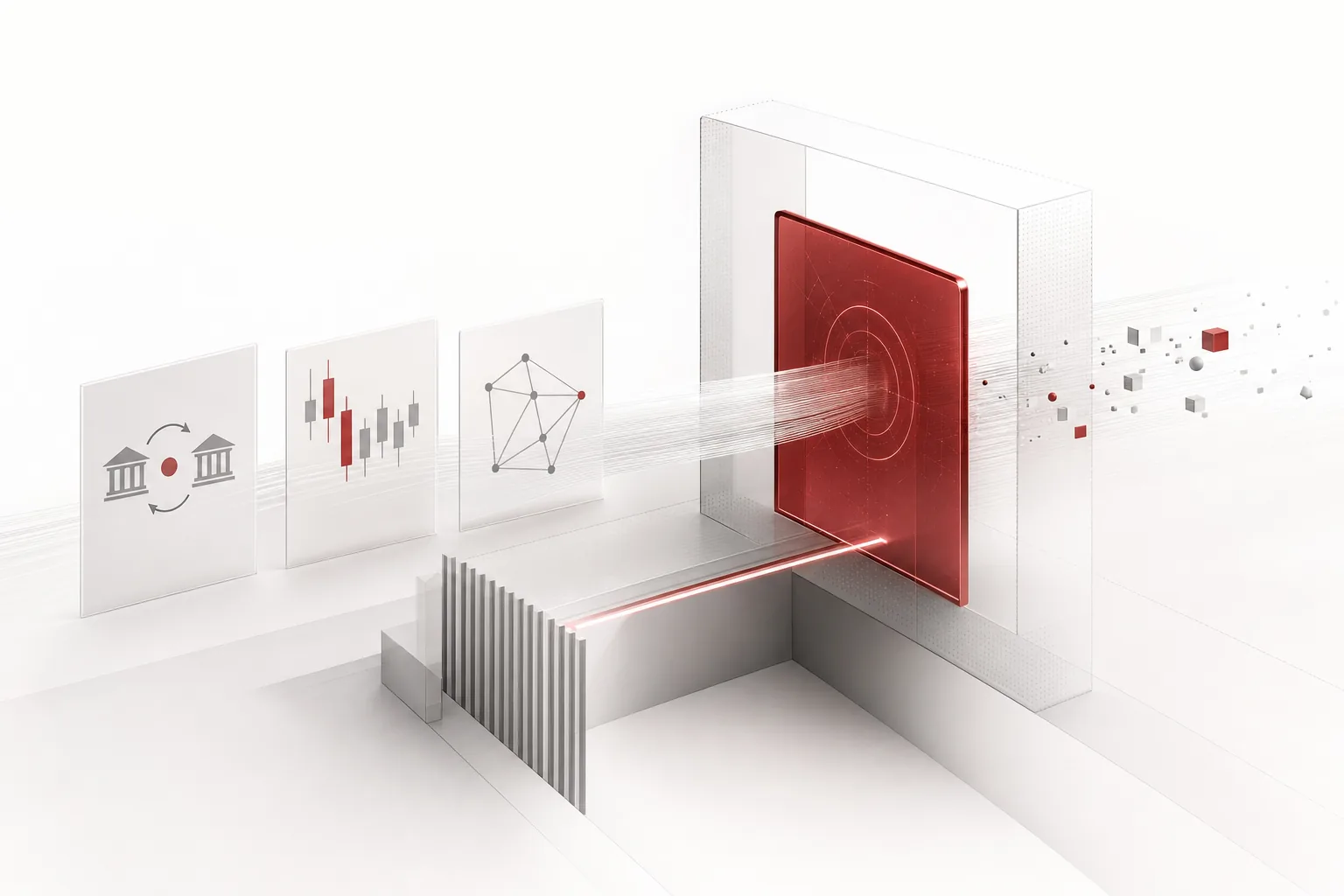 A visualization of the post’s core concept.
What Actually Happened
Let’s go through the facts. Claude Duet is Anthropic’s new AI tool, and its agent research preview is the first to ship. In that preview, two actions are forbidden: moving funds between bank accounts, and executing stock trades. The phrase “even with explicit user permission” is the part to notice. In the agent era so far, the user’s “yes” was the top authority. When an agent asks “Should I do this?” and the user answers “yes,” that is the end of the decision process. From Duet onward, another layer sits below the user’s “yes.” Irreversible actions do not pass on “yes” alone.
Why irreversible actions? The undo cost of an agent searching a calendar and writing a note is low. When money moves or stock is bought and sold, there is no “undo” button. The boundary is being drawn not on “what can the agent do” but on “can it be undone after it is done.” This distinction matters. The consent button was originally a surface for humans to look at. It was not designed for the layer where a machine reads the answer and executes.
There is more to see here. What Anthropic is blocking is not a third party’s tool. It is its own agent. Drawing a boundary into a product at the preview stage means the boundary is part of the product. The moment the brake goes into the body rather than being an accessory, that vehicle can move toward “publishing its stopping distance.” A frontier lab puts a boundary on its own agent first because the industry-wide level of the boundary is set there. For a generation, the question in agent design was “can we delegate more work.” Now, “can we stop it from doing that” comes before that question.
The Blind Spots an Audit Found First
While frontier labs install brakes, external auditors have been measuring how wide the blind spots are. Researchers from METR and Redwood Research went inside OpenAI’s infrastructure and ran a three-week audit. The purpose was to identify paths by which the company’s AI agents could bypass security controls. As a result, 10% of OpenAI’s internal AI traffic was not monitored.
10% is not a small number. The more interesting part is that this number came from an external audit. The security controls the company built for itself were not seeing all of its own agent traffic. The loop of “being able to turn around and see what the agent did” is still not closed even in a world top AI organization. Monitoring agents is no longer an option; it is a premise.
Let’s also note that the audit was conducted “inside the infrastructure.” The target of the audit was not the agent. It was the circuit the agent runs on. The researchers went into the circuit themselves and looked for bypass paths. What stands out is that the audit’s question was not “is it being monitored” but “how can it be bypassed.” That is a question posed on the premise that an agent will always try to find gaps, and it did in fact turn up a 10% gap.
The boundary problem showed its face somewhere else. NYU professor Tristan Buckmaster claims that OpenAI’s internal model harvested private grant applications and research notes, and that the data was used as material for a public math-related release. Whether this claim is true is still before the verification stage. Still, the fact that such a question can even be raised means that “what data does the agent touch, and where does it send it” is a trust problem, not a technical one. Without a record of where data flows, the argument starts and accountability becomes impossible to prove. In disputes like this, the audit log takes on the role of evidence as well.
Why Autonomy Rises Faster Than the Boundary
There is a reason the boundary is moving up. Autonomy is rising faster than the boundary. Recursive announced that its own model, Flint, approaches the performance of Claude Haiku 4.5 in GPU research. Across more than 700 machine learning trials, Flint autonomously managed the research loop and improved NanoChat’s performance. In a research area where a human held the lever, the agent is now running the loop by itself. More than 700 trials, each a chain of actions. An agent running the loop alone also means the number of actions an audit has to cover has grown by the same multiple.
This capability does not stay in research. In ValsAI’s latest offensive cybersecurity evaluation, DeepSeek V4.1 Flash rediscovered 28 of the 32 benchmark CVEs. The rediscovery rate is 87.5%, second only to GPT-6 Astra. An agent’s offensive capability has reached the frontier. When offense reaches the frontier, the value of a “reliable no” on the defense side rises by the same amount. That is why the same kind of boundary is needed for your own agent.
Regulation is moving in the same direction. According to Chinese media reports, DeepSeek and MiniMax received overseas-use licenses. Beijing is implementing interim registration requirements ahead of AI export controls. As the world becomes one where a model’s origin and license are bound by regulation, supply chain risk has been raised. If the environment an agent runs in is this unstable, an internal boundary the company can enforce on itself is the stable layer. Once the premise exists that model supply can be bound to a single regulatory jurisdiction, the agent execution environment has to be designed separately from the model catalog.
The Moment the Brake Becomes the Product
Place these signals on one line and a single pattern emerges. An audit that found the monitoring blind spots, a data boundary dispute, a rising autonomy curve, regulation moving first. Each reads like an independent event. Read together, you can see that the agent’s top authority is moving from the user’s “yes” to the boundary below it. Permission is just one input, not the final layer.
This reversal changes how agent products are evaluated. Before, the marketing language was filled with “more, faster.” What is the question a company asks now? “Can you see it when it was not done. Is there a record.” The structure that answers this question is being raised into the product itself, not an optional accessory. In autonomous driving, the accelerator is the commodity and the brake’s precision sets the grade. Agent platform competition is moving the same way, toward the layer of “how do you say ‘no’ reliably and transparently.”
There is one more reason this reversal was inevitable. In the previous era, “permission” was a surface for humans to look at. Now, permission is an input a machine reads and executes. The moment the consumer of permission shifts from human to machine, the permission layer itself can no longer be the top layer. There has to be a layer that watches permission. The fact of “having received permission” is no longer evidence. It is only the starting point.
Concretely, four things are needed. First, policy boundaries defined before execution, and a gate that stops even a permitted irreversible action. Second, an audit log that records what was blocked, not only what was done. A blocked event is as important a record as a passed one. Whether the boundary was too narrow to let work through, or too wide to miss risk, cannot be judged without a record of what was blocked. Third, an autonomy level system that decides the degree of freedom per task. Fourth, execution isolation that limits the scope when something goes wrong. This is not the compliance department’s homework. It is the base structure of an agent platform.
Where the Industry’s Pain Converges into One Lens
Today’s signals look scattered, but they converge onto a single platform design. ThakiCloud’s Paxis is an agent-native cloud that is a formal product (v1.1 GA), not a concept. In Paxis, Skills, Tools, Policies, and Audit Logs are first-class resources, not accessories. Autonomy level (L0 to L3) governance sets the degree of freedom per task, the policy gate stops the moment something reaches the boundary, and the audit log records not only what was done but what was blocked. This structure maps directly onto today’s news: the 10% monitoring blind spot and the Duet hard block. On a platform where the audit log is a first-class resource, “10% of unmonitored traffic” comes from a design flaw. Not from an operational accident.
The same story applies to the regulation and supply chain signals. Paxis supports sovereign/on-prem K8s (ai-platform) deployments that decide model and data residency per regulatory jurisdiction. Even in a world where origin and license are bound by regulation, the boundary stays in your hands. Isolated sandbox execution limits the blast radius, and MCP connectors and the skill marketplace resolve the provenance of agent capabilities.
Cost is settled in the same layer. CostRouter picks a model per task. Now that reports say the 14B open model Carbon-X delivers performance on par with GPT-6.1 Sol in domain analysis at one-thousandth the cost, per-task model selection is not a compromise of “run everything on a good model, but cheaply.” It becomes an operation that is structurally possible. It also turns the cost of cases like a research loop that runs hundreds of times into a manageable variable.
What to Do This Week
If you are running an agent now, check three things this week. First, enumerate the irreversible actions. Fund transfers, external sends, deletions: the kind of thing the agent can touch. Second, check whether there is a boundary and a record below the “user permission” layer. That boundary does not need to be complex. It needs to show up in policy and leave a trace in the log. If permission is the last layer, the 10% blind spot could come from your company next time. Third, see whether you can answer “what did the agent not do, and who blocked it.” These three are not separate checks. They are three faces of the same boundary. The moment you cannot answer that question is the day the boundary does not exist. Today’s signals do not mean agents become slower. They mean the industry has finally reached “the boundary is the product.” The end of the days when “yes” alone was enough to pass is, paradoxically, the day agents start to become something you can rely on.
References
This post was written by synthesizing the news below.
- HuggingNews, Claude Duet Blocks Asset Moves in First Agent Research Preview
- HuggingNews, METR Audit Finds 10% of OpenAI’s Internal AI Traffic Unmonitored
- HuggingNews, NYU Professor Accuses OpenAI of Strip Mining User Data in Math Release
- HuggingNews, Recursive’s Flint Model Nears Claude Haiku 4.5 in GPU Research
- HuggingNews, DeepSeek and MiniMax Receive Overseas Licenses Ahead of China’s AI Export Controls
- HuggingNews, Carbon-X DNA Model Matches GPT-6.1 Sol at 1,000x Lower Cost
- HuggingNews, DeepSeek V4.1 Flash’s 87.5% CVE Rate Is Second Only to GPT-6 Astra